


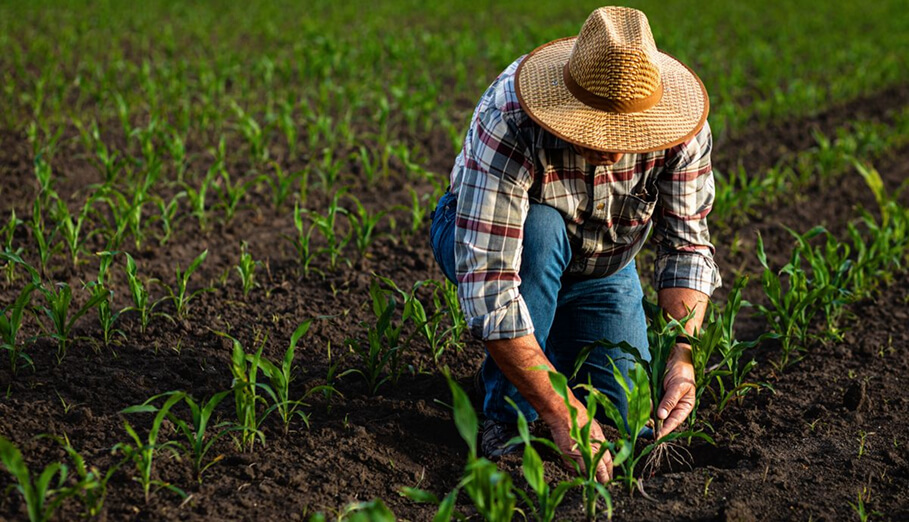
Agricultural productivity begins long before crop emergence. While factors such as soil fertility, nutrient management, and weather conditions are critical to final yield, there is another component that is often underestimated: seed uniformity. In high-technology production systems, even small physical and physiological variations can disrupt crop establishment, reducing resource-use efficiency and affecting yield stability.
Physical Uniformity and Its Impact on Plantability
The establishment of a uniform crop depends on the physical quality of the seed lot. Characteristics such as size, weight, shape, and density influence how seeds behave within planter metering systems. When a lot shows significant variation, planter accuracy can be reduced, increasing the likelihood of skips and doubles.
Plantability reflects this interaction between mechanical engineering and seed biology. Well-standardized seed lots support more accurate metering and more consistent placement in the soil, with appropriate depth and spacing. In contrast, heterogeneous seed lots increase operational variability, reduce equipment efficiency, and can limit the return on investments made in planting technology.
Physiology, Vigor, and Competition Between Plants
Physical differences within a seed lot may also reflect variation in physiological vigor and germination potential. High-vigor seeds generally establish more rapidly, helping the crop develop a more synchronized and resilient stand under variable environmental conditions.
Uniform emergence allows plants to compete for water, light, and nutrients under more balanced conditions from the earliest growth stages. When emergence is uneven, delayed plants are placed at a competitive disadvantage. These dominated plants may intercept less light and develop less robust root systems, which can reduce yield potential in high-density crops such as soybeans and corn. Research institutions have consistently identified emergence uniformity as an important factor associated with crop yield potential.
Precision Processing with Profile Industries Technology
Seed lot uniformity is not simply a natural outcome of harvest; it is built through structured processing and sorting operations. Modern seed processing aims to reduce physical variability and remove off-spec material, helping create the consistency required for accurate planting and more uniform field emergence.
Profile Industries supports this stage of the process with specialized sorting technologies. Solutions such as the Rotary Spiral and Belt Grader separate seeds according to documented physical characteristics, helping improve lot consistency and support downstream planting performance.
By combining industrial engineering with application expertise, Profile Industries helps seed processors improve physical standardization and create more consistent material for the next stage of production.