


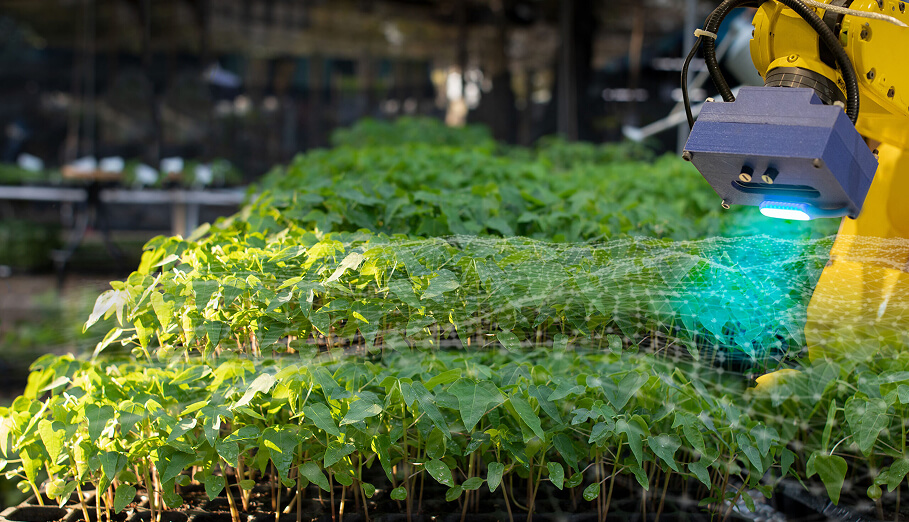
The digital transformation of agribusiness has moved far beyond the field and is now reshaping seed processing facilities. While advances over recent decades focused largely on greater scale and purely mechanical automation, the next industrial frontier belongs to systems capable of interpreting data, recognizing patterns, and adjusting operations in real time. Artificial Intelligence is emerging as a key driver of this shift, redefining quality control through computer vision and advanced automation.
The Algorithmic Eye: High-Speed Computer Vision
Computer vision replaces the subjectivity of human visual inspection with a consistent analytical standard. Ultra-high-resolution cameras combined with machine learning models can examine individual seeds in fractions of a second, identifying subtle variations in color, shape, texture, and external geometry.
This technology can help identify signs of deterioration and morphological abnormalities before a lot proceeds to physiological laboratory testing. The immediate result is greater product consistency and a higher level of control when removing off-spec material.
Detecting hidden damage and automating process flow
Internal cracks and mechanical microdamage caused during harvesting or drying may go unnoticed by traditional separation methods, yet they can significantly affect seed vigor in the field. Newer deep learning models are expanding the ability to detect these types of damage by being trained to recognize crop-specific seed coat patterns and other visual characteristics.
Combined with this analytical capability, advanced automation can create a self-adjusting production environment. Industrial sensors continuously monitor seed flow and reject rates. When deviations in material behavior are detected, system parameters can be adjusted to maintain process consistency. This level of automation can help reduce operator-dependent variation, minimize downtime, and improve operational stability.
The Mechanical Foundation for Digital Intelligence
Data-driven seed processing depends directly on the physical stability of the process. Cameras and intelligent sensors require consistent feeding and effective material distribution for digital analysis to perform reliably. Excessive variation in material flow can reduce the effectiveness of algorithms and compromise the consistency of the resulting analysis.
Profile Industries supports this type of integration through high-performance sorting technologies. Solutions such as the Rotary Spiral and Belt Grader help improve the uniformity and consistency of processed materials, supporting greater stability throughout the processing line. By producing more uniform lots and more consistent material flow, these technologies can provide a strong mechanical foundation for downstream digital and automated systems.
Connected Efficiency
Artificial Intelligence does not replace the physical and mechanical principles of seed processing; it enhances the ability to monitor, analyze, and manage increasingly complex operations. The future will belong to processors that effectively combine the capabilities of software with reliable hardware.
By combining robust engineering with precise physical sorting, Profile Industries helps provide the process consistency needed for seed processors to integrate new generations of automation and digital technologies with greater confidence.